
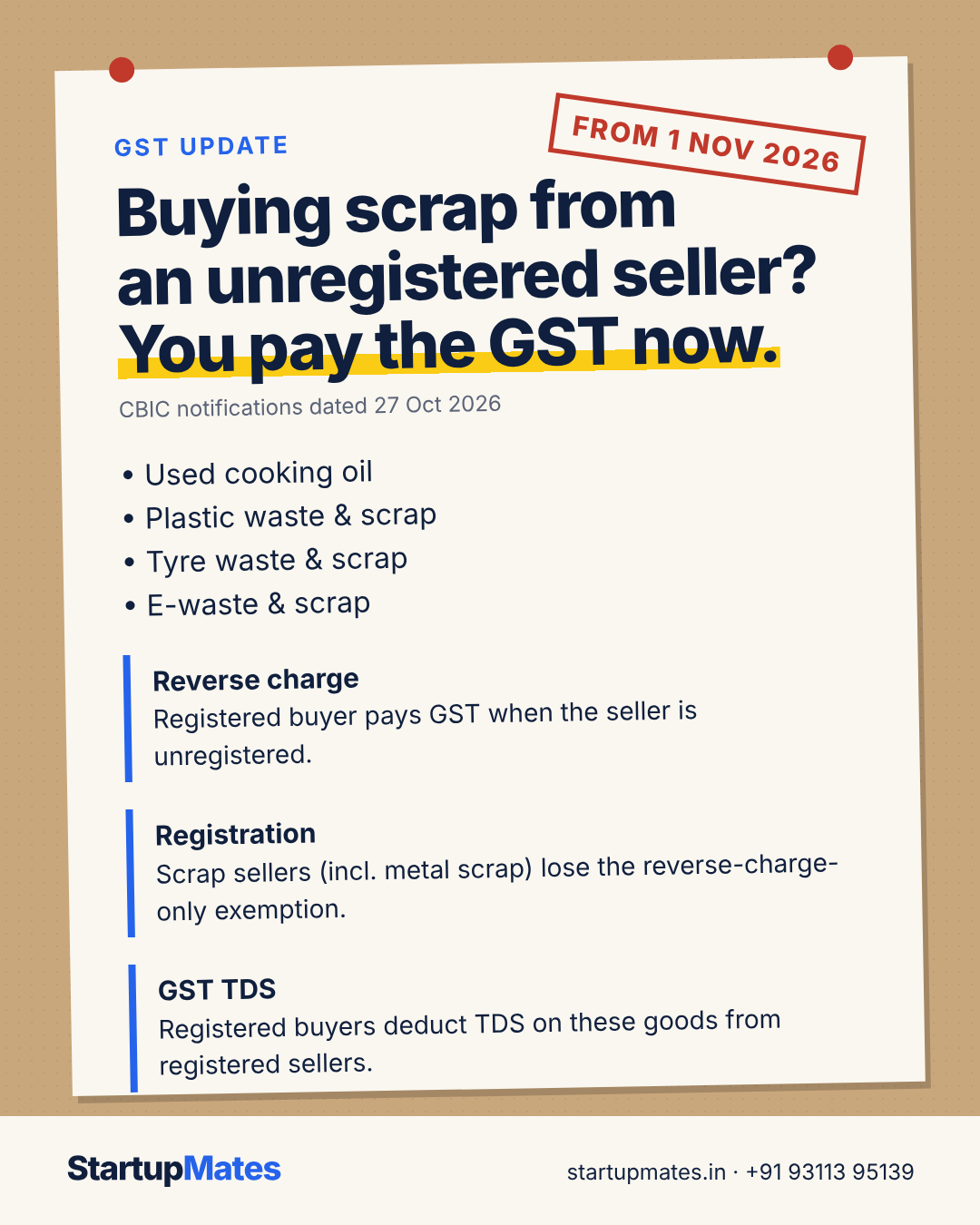
From 1 November 2026, a registered buyer pays GST under reverse charge when it buys used cooking oil, plastic waste, tyre waste or e-waste from an unregistered seller. Scrap sellers also lose a registration exemption, and GST TDS now covers these purchases.
CBIC issued a set of GST notifications dated 27 October 2026 that change how scrap and waste are taxed. They apply from 1 November 2026.
What has changed
- Reverse charge (Notification No. 04/2026-Central Tax (Rate), with matching IGST and UTGST notifications): when an unregistered person supplies any of these goods to a registered person, the registered buyer now pays the GST:
- used cooking oil (heading 1518);
- waste and scrap of plastics (3915);
- waste and scrap of tyres (4004);
- electrical and electronic waste and scrap (8549).
- Registration (Notification No. 06/2026-Central Tax): suppliers of these goods, and of metal scrap (Chapters 72 to 81), can no longer use the exemption from registration for persons who make only reverse-charge supplies.
- GST TDS (Notification No. 07/2026-Central Tax): a registered person buying these goods, including metal scrap, from another registered person now has to deduct GST TDS under section 51 of the CGST Act.
What to do
- If you buy scrap or waste from unregistered sellers, pay GST under reverse charge from 1 November, issue a self-invoice and report it in GSTR-3B.
- If you sell scrap or waste, check whether you now need GST registration.
- If you buy these goods from registered sellers, take TDS registration if you don't have it, deduct TDS and file GSTR-7 by the 10th of the next month.
- Update purchase entries and vendor master data in your accounting software.
Need GST registration or help with reverse charge and TDS returns? Call or WhatsApp +91 93113 95139.
Sources: CAclubindia, SCC Online, CA Cult (GST TDS), CBIC.
#gst#reverse-charge#gst-tds#scrap
Need help with this?
Our experts can handle it for you. The first call is free.